Jewish Town Hall
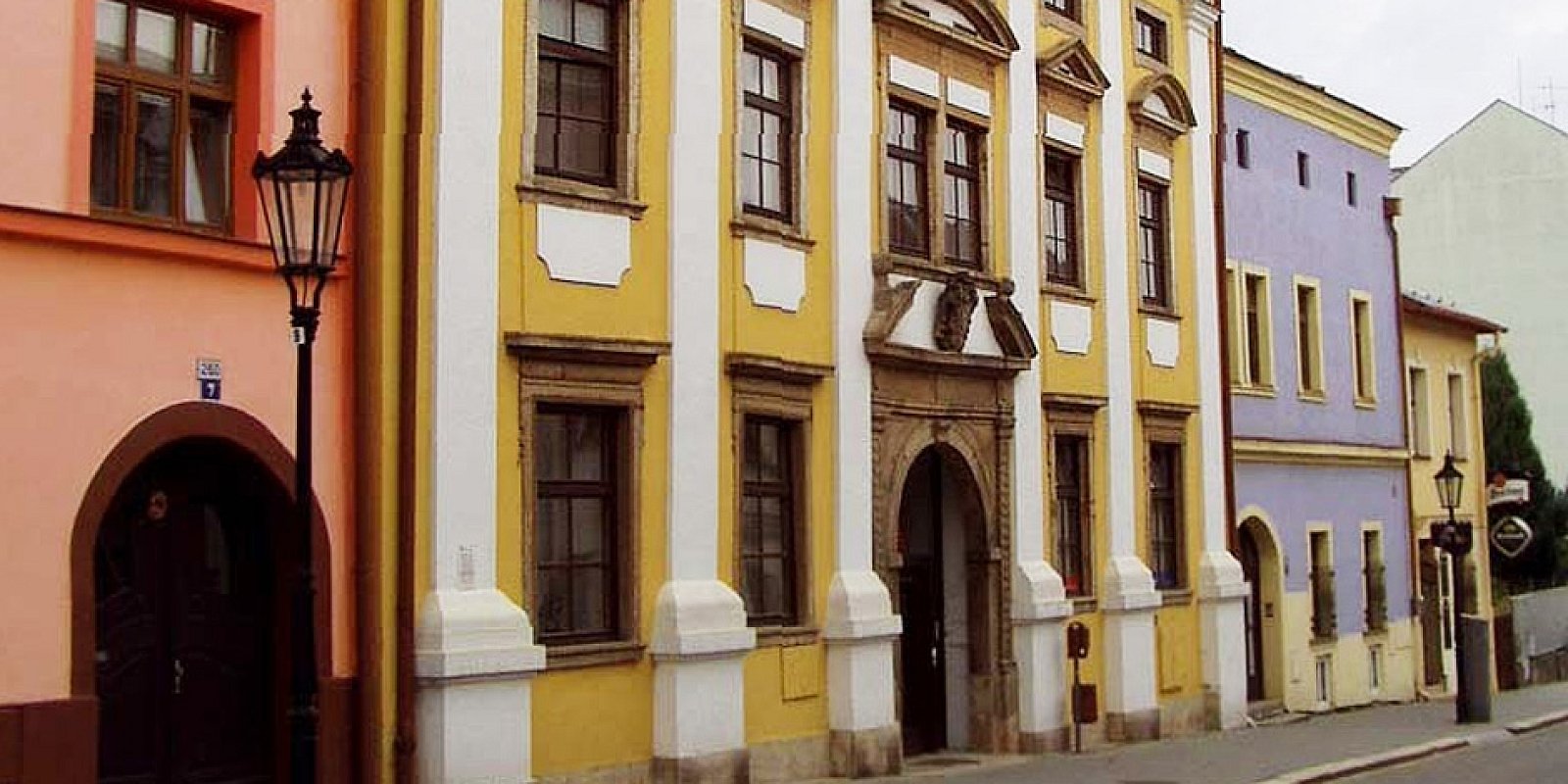
This Baroque building was the most important building of the Jewish community in Kroměříž. It housed the Jewish self-government, a winter prayer room and the rabbi's flat. The land was donated to the community by Bishop Karl II of Liechtenstein-Castelcorn, and the design was by the architect Giovanni Pietro Tencalla. The façade is divided by pilasters, the ground floor has a barrel vault, and above the entrance with its portal is the bishop's coat of arms. Around 1720 the building was altered, and it kept this appearance even after its reconstruction in the second half of the 20th century.
The first written record of Jews in Kroměříž dates from 1322, when King John of Luxembourg allowed the Bishop of Olomouc to settle a Jewish moneylender on his estates. According to the charter of privileges granted by Cardinal Dietrichstein, the community had 21 houses including a hospital, later 35 houses, each home to several families. There was also a ritual bath, a school, a synagogue and a cemetery. After the special status of Jews was abolished in the mid-19th century, families began moving into the inner town. The history of the Kroměříž community was written by Rabbi Dr. Adolf Frankl-Grün in the book Geschichte der Juden in Kremsier, published in Wrocław in 1896.
The last rabbi of Kroměříž, Joachim Astel, lived with his family on the first floor; all of them died in Auschwitz. They are commemorated by four Stolpersteine (Stones of the Disappeared) in front of the building, laid in November 2017. The building is part of the Kroměříž Urban Heritage Reserve.