Ghetto Separation Wall
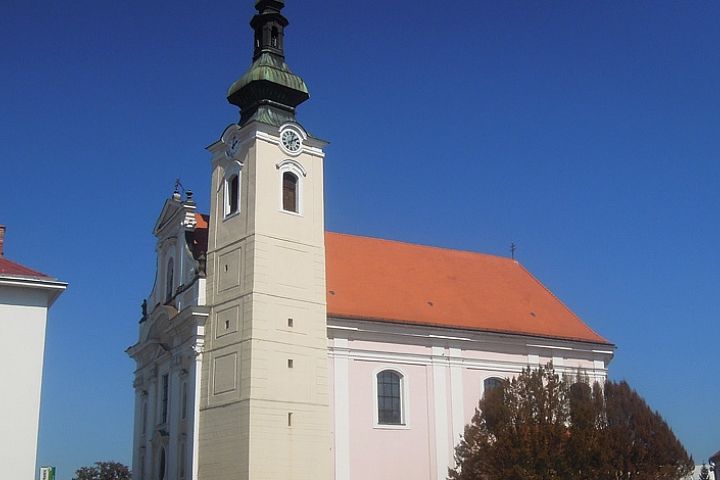
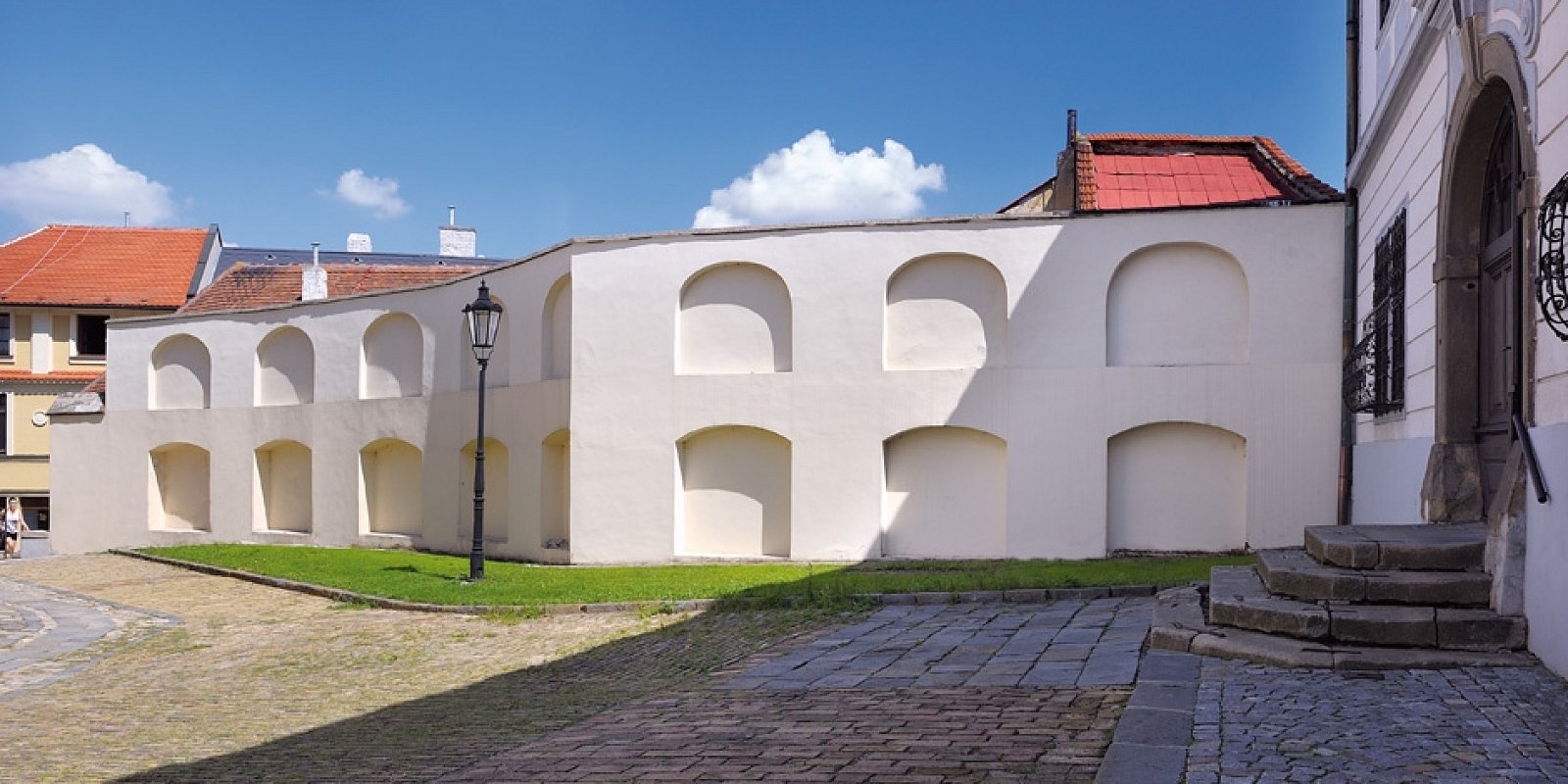
The high wall was built around 1680 on the orders of Bishop Karl II of Liechtenstein-Castelcorn to separate the Jewish quarter from the rest of the town. It was altered several times later, and only a section survives near the parish Church of the Assumption of the Virgin Mary and the Emeritní dům. The niches in the wall were originally decorated with paintings from the life of the Virgin Mary; these have not survived, and since 2016 the niches have held old views of Kroměříž.
At night the entrance to the ghetto was closed with a heavy chain. The Jewish quarter lay roughly in today's Moravcova and Tylova streets. Moravcova is named after the Piarist and historian František Adolf Moravec, while Tylova commemorates the playwright Josef Kajetán Tyl, a deputy of the Imperial Diet in Kroměříž in 1848–1849. The street led to the Chapel of St Michael by the Church of the Virgin Mary, whose foundations survive underground. From the 16th century there was a cemetery by the church, closed in 1788.
The Jews of Kroměříž gained equal rights with the other inhabitants in the revolutionary years 1848–1849. The wall is part of the Kroměříž Urban Heritage Reserve.