Mill Gate
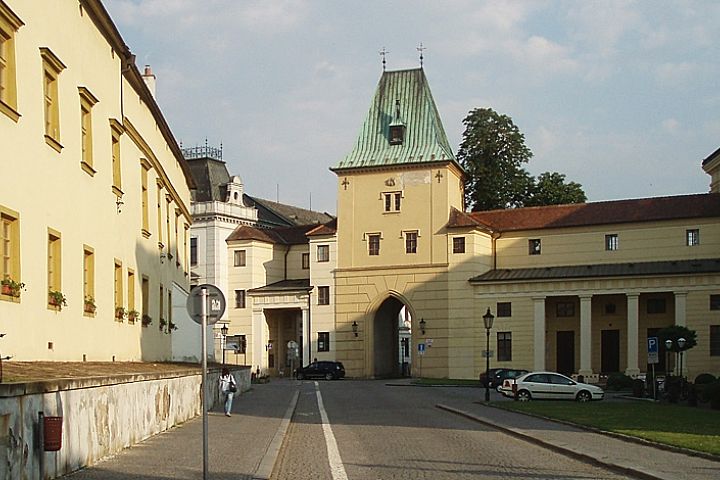
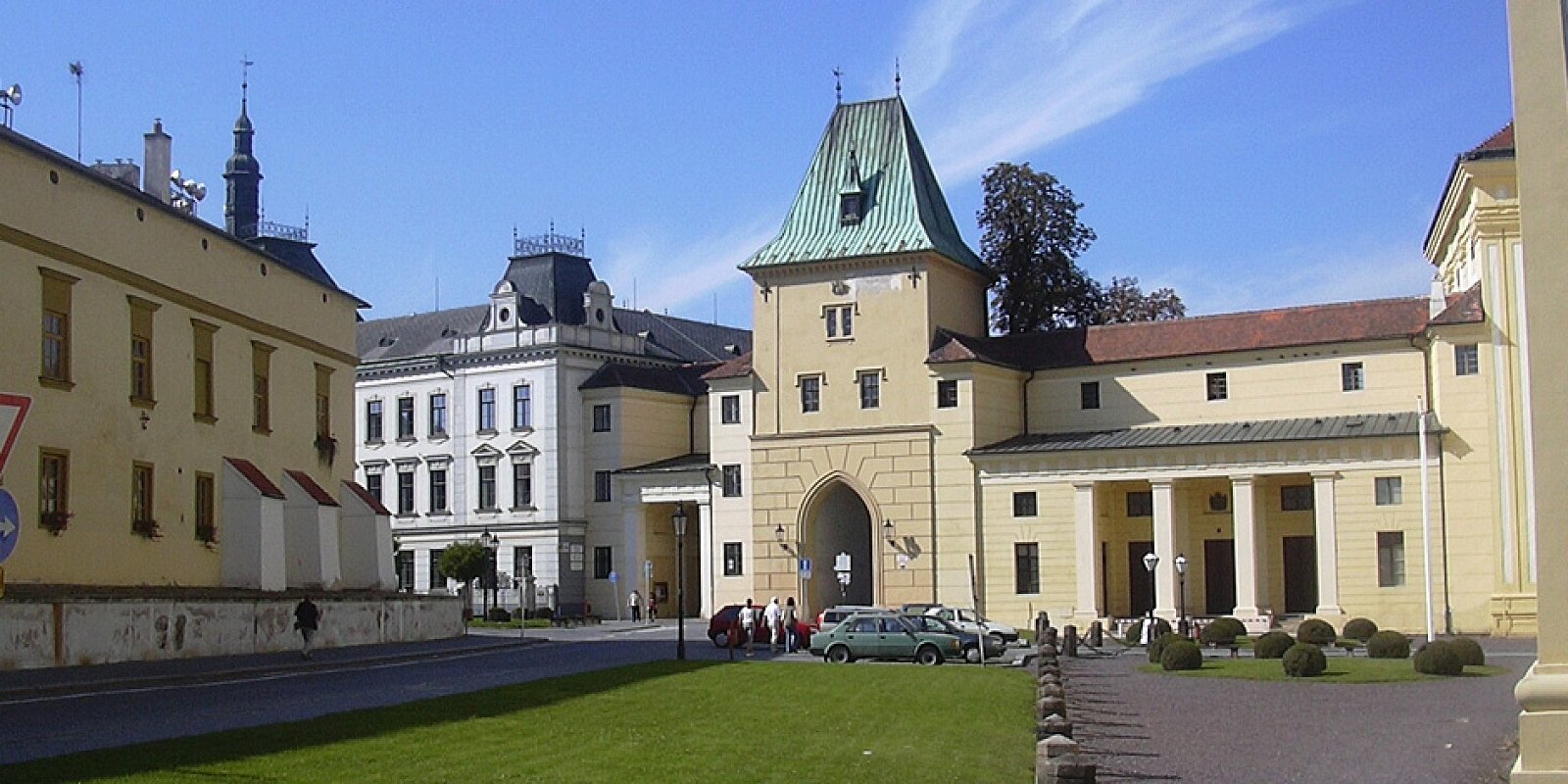
The Mill Gate (Mlýnská brána) is the only surviving one of the three gates of fortified Kroměříž. The other two, the Water Gate and the Blacksmiths' Gate, were demolished in 1855–1857. The road through the gate led to the manorial buildings outside the walls, mainly the mint, the mill and the brewery.
The gate adjoined the chateau moat; it was administered by the bishop and guarded by his guard. A fragment of an early Baroque painting has survived on the front of the tower, recalling the renewal of the town under Bishop Karl II of Liechtenstein-Castelcorn. The gate acquired its present appearance in the second half of the 19th century, partly to a design by the architect Anton Arche.
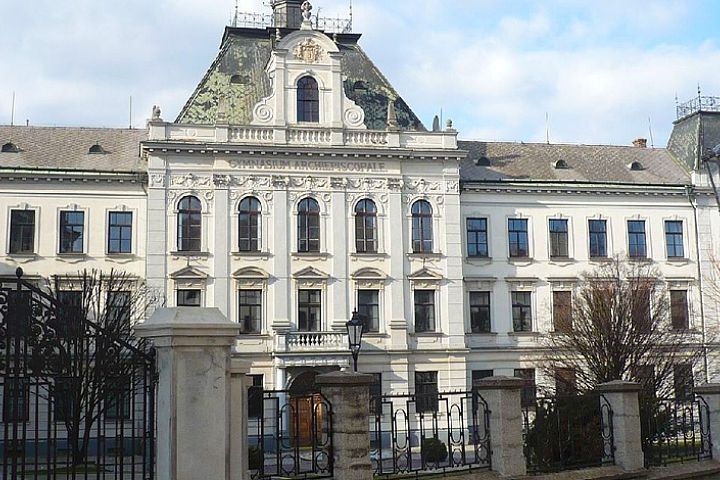
After 1833 the deep moat around the chateau was filled in and the Classicist guardhouse (gardistka) was built. A corridor ran along its upper floor from the chateau through the Mill Gate and the Archbishop's Grammar School to the Church of St Maurice. The gate and the guardhouse were the seat of the princely archbishop's guard, which Archbishop Lev Skrbenský abolished in 1919. When the neighbouring grammar school was extended in the early 20th century, a wider pedestrian passage was cut next to the narrow gate.
The gate is part of the Kroměříž urban heritage reserve.